She learned how to show up smiling, no matter how tired her body felt.
In the pastry kitchen, that counted as strength. If you could keep moving, keep the mood light, keep everyone else going until the end of the shift, you were considered reliable. Valuable. Easy to keep. So she learned how to push through exhaustion with a laugh and call it professionalism.
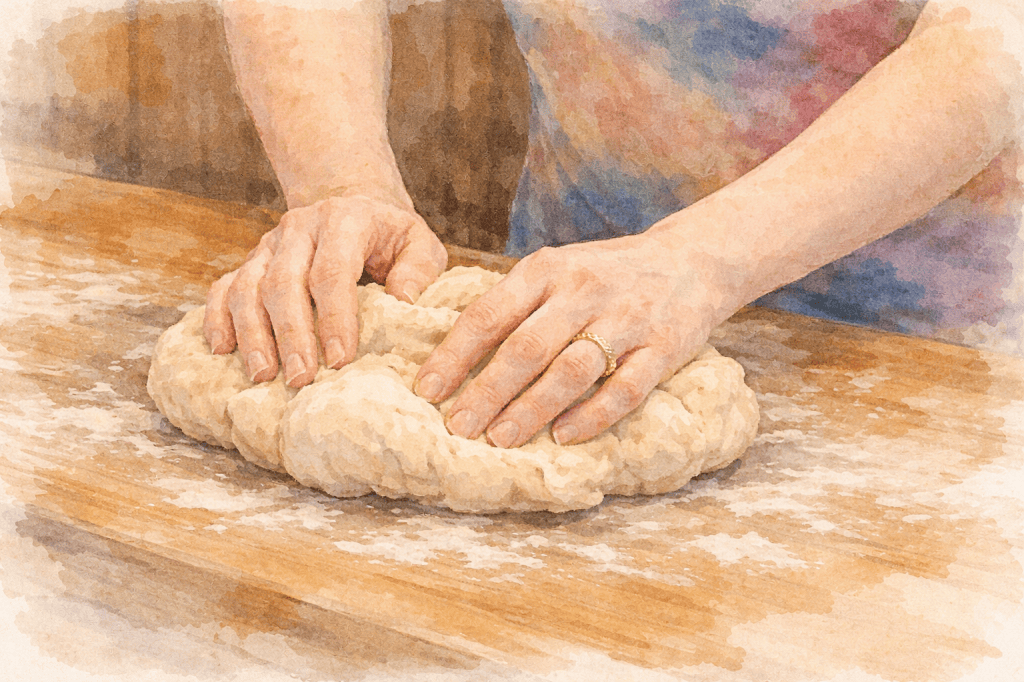
Ten-hour days were normal. Twelve-hour days weren’t unusual. The work demanded repetition—kneading, piping, whisking, lifting sheet trays in and out of hot ovens—movements so familiar they became automatic. Burns healed into scars. Wrists ached. Feet stayed sore. And still, she showed up.
Back then, she believed strength meant pushing through.
Somehow, she became the happy one. The one who lifted the room when morale dipped, who joked through exhaustion, who arrived already steady so others could unravel if they needed to. She learned that positivity made her easier to work with, easier to lean on. So she practiced it until it felt like part of her job description.
She folded pain into her days the same way she folded butter into dough—quietly, thoroughly, without drawing attention to it. Autoimmune illness lived in her body long before she had language for it. Fatigue hummed beneath her skin. Joints flared and settled again. She learned how to work around it, because kitchens don’t pause for bodies that struggle.
Her hands tell the story now. Years of repetitive motion shaped them, then surgery reshaped them again. Some mornings they feel stiff, unfamiliar. Some days they surprise her with how much they can still do. She never thought much about longevity then. Only capability. Only output.
There were seasons when she carried more than exhaustion into the bakehouse. Loss lived quietly in her body—unspoken, unacknowledged, tucked beneath her apron. Still, she showed up cheerful. Still, she pushed everyone toward the finish line. She learned how to function anyway, because the shift had to end clean, no matter what was breaking inside her.
Looking back, she can see how much energy it took to always be the one who kept going. Emotional regulation came easily once; now it feels thinner, less predictable. Not because she is weak, but because a nervous system can only hold so much for so long.
At the time, she didn’t question any of it.
This was what work looked like.
This was what dedication required.
This was what it meant to belong.
She did not yet know that endurance, cheerfulness, and worth are not the same thing.
 The Peaceful Bakehouse
Leave a comment